
Written by:
Pierce J.
Published:
April 15, 2026
Master how to wrap furniture for moving like a professional. Learn essential techniques and materials to protect your belongings with Wellen Moving’s expert guide.
Preparing for a relocation involves more than just putting items into boxes; you must understand how to wrap furniture for moving to ensure your investment stays safe. Whether you are transporting a vintage dresser or a modern glass table, the right padding prevents scratches and structural damage during transit. Taking the time to secure your items properly with a professional moving company is the hallmark of a successful transition.
Protect your valuable home investments by booking our expert heavy lifting and padding services today by calling (941) 231 2831 for assistance.
Selecting the right materials is the first step in the process of securing your household goods. You will need high-quality stretch film, thick moving blankets, and strong adhesive tape to create a protective barrier. Without these essential tools, your wooden surfaces and upholstery are vulnerable to the friction and vibrations of a moving truck throughout the journey.
Using professional-grade supplies is non-negotiable when you want to achieve the best results. Standard household blankets often lack the density required to absorb impacts, whereas industrial moving pads provide a thick cushion. Investing in quality materials saves you money in the long run by avoiding the high cost of furniture repair or replacement.
Quality stretch wrap acts as a second skin for your items, keeping drawers shut and protecting fabric from dust. It is important to remember that plastic should never touch leather or finished wood directly for long periods. Always place a layer of breathable fabric or paper between the plastic and the delicate surface.
Before you start applying any protective layers, you must clean every piece of furniture thoroughly. Dust and debris trapped under plastic wrap can act like sandpaper, scratching the finish as the item shifts. Wiping down surfaces ensures that no abrasive particles are trapped against the wood or metal during the relocation.
Disassembling larger items is another critical preparation step that makes the wrapping process much easier. Removing legs from tables or taking apart bed frames reduces the footprint of the item and minimizes the risk of breakage. Keep all hardware in labeled bags and tape them securely to the corresponding piece of furniture.
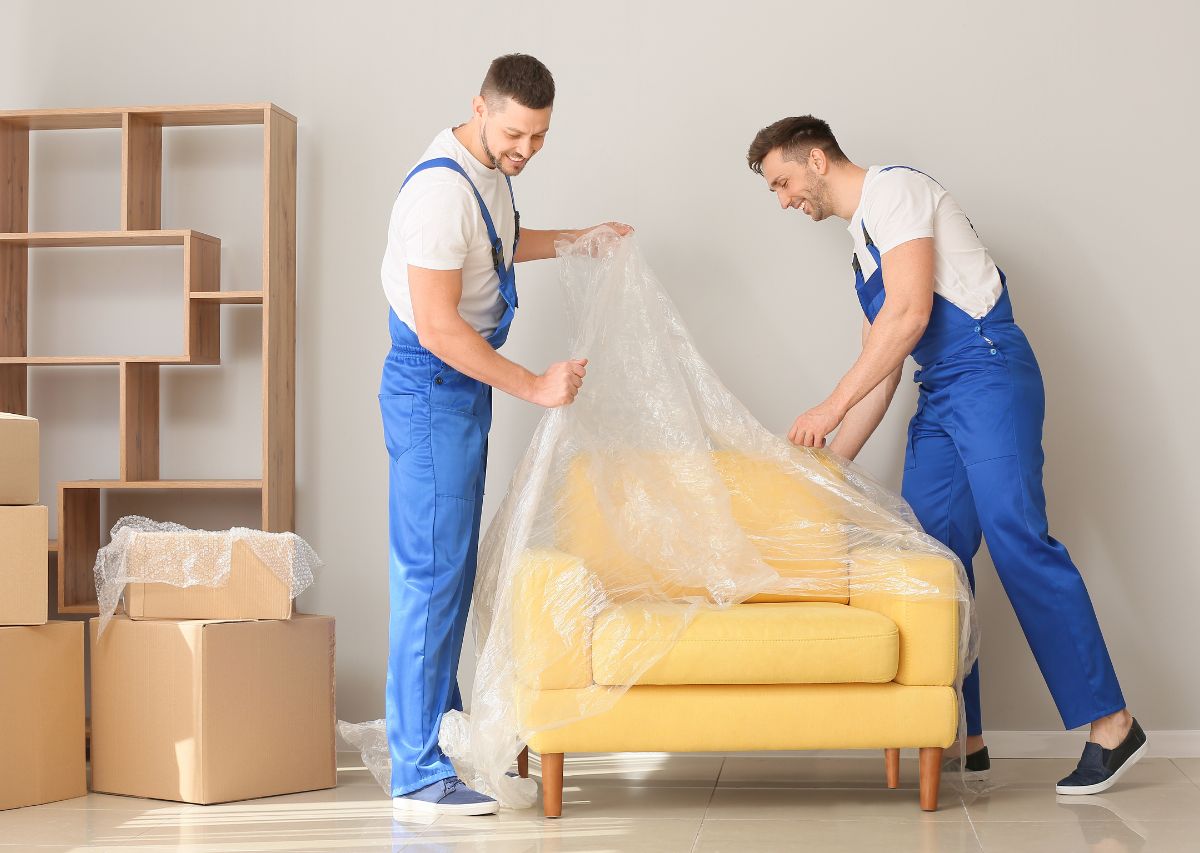
Sofas and armchairs require a specific approach to prevent stains and tears during the transition. Start by removing all cushions and wrapping them individually in plastic to keep them clean. Then, cover the main frame with a layer of plastic wrap to shield the fabric from moisture, dirt, and potential pests.
For extra protection on the corners of upholstered pieces, consider adding cardboard inserts before the final layer of film. This reinforces the areas most likely to strike doorways or walls while being carried. Proper tension on the wrap ensures that the protection stays in place without crushing the internal foam.
Wooden furniture is particularly susceptible to gouges and climate changes during a move. Wrap these items in thick moving blankets, ensuring that every corner and edge is completely covered. Use packing tape to secure the blankets to themselves, making sure the tape never touches the actual wood finish.
Once the blankets are secure, add a layer of stretch film over the top to lock the padding in place. This creates a rigid shell that resists impacts and prevents the blankets from slipping. This double-layer method is the gold standard for protecting high-end wood finishes from the rigors of transport.
Glass tabletops and mirrors are the most fragile items in any household and require extreme care. Start by creating an X-pattern across the glass with painter's tape to provide structural integrity and prevent shattering. Then, sandwich the glass between two sheets of heavy-duty cardboard or specialized foam protectors.
After the cardboard is in place, wrap the entire assembly in several layers of large-bubble wrap. Secure this with tape and finish by wrapping the item in a moving blanket. Always transport glass on its edge rather than flat to minimize the risk of pressure cracks during the ride.
Modern office furniture and electronics often have sensitive screens and delicate plastic housings. Use anti-static bubble wrap for computer monitors and televisions to prevent electrical discharge damage. Ensure that all cords are detached, coiled neatly, and labeled before they are packed alongside the main unit to avoid confusion.
For desks with multiple drawers, remove the contents to reduce weight and prevent internal shifting. Wrap the desk in blankets just as you would a wooden table, paying close attention to the leg joints. Ensuring your items receive specialized furniture protection ensures your workspace is ready for immediate use at the new location.
Properly wrapped furniture is much easier to stack and maneuver inside the moving vehicle. When items are uniform in shape due to tight wrapping, you can utilize vertical space more effectively. This prevents items from shifting or toppling over when the truck encounters bumps or sharp turns on the road.
Place the heaviest wrapped items on the bottom to create a stable base for lighter boxes. Use the gaps between furniture legs to store smaller padded items, ensuring every cubic inch of the truck is used. A tight load is a safe load, as it limits the movement that causes damage.
One frequent error is using the wrong type of tape or applying it directly to the furniture surface. Adhesives can leave permanent residues or even strip away delicate veneers and paint when removed. Always ensure that tape only adheres to the wrapping paper, plastic film, or the moving blankets themselves.
Another mistake is over-wrapping items to the point where they become impossible to grip. Professional movers need to be able to handle the furniture safely without their hands slipping. Leave designated handholds or ensure the wrap is tight enough that it does not slide when the piece is lifted.
Before any piece of furniture leaves the house, perform a final check of the wrapping. Ensure there are no loose flaps of plastic or hanging blanket edges that could cause a trip hazard. A quick pat-down of the item will reveal any thin spots in the padding that need reinforcement.
Verify that all labels are visible so that the movers know exactly where each piece belongs in the new home. Clear communication and organized wrapping significantly speed up the unloading process. Taking these final seconds to inspect your work ensures that your efforts in protecting your property are successful.
Wellen Moving brings years of local expertise to every doorstep in our community. We provide comprehensive residential hauling, meticulous packing, and specialized furniture protection. Our team treats every heirloom as our own, utilizing premium materials for total safety. Let us handle the heavy lifting so you can enjoy a seamless transition.
Contact: (941) 231 2831
To protect wood finishes, never apply plastic stretch film directly to the surface. Plastic can trap moisture or heat, causing the wood to cloud or the finish to soften. Always wrap the item in a breathable moving blanket first, then apply the plastic wrap over the blanket to secure the padding.
You should use painter's tape to create a grid on the glass, which helps absorb vibrations. Cover the glass with specialized foam or heavy cardboard on both sides before wrapping it in large-bubble wrap. Finally, secure it with a moving blanket and transport the piece on its side for maximum safety.
Yes, removing legs, glass inserts, and shelving makes the wrapping process much more effective. Smaller components are easier to pad individually and are less likely to snap under pressure. Keep all screws and bolts in a sealed bag taped to the main frame so you can reassemble everything quickly later.
While household blankets offer some protection, they are typically too thin to prevent dents from heavy impacts. Professional moving pads are engineered with dense fibers specifically designed to absorb shocks. Using the right equipment ensures that your furniture survives the journey without any damage.
The wrap should be tight enough to hold the blankets firmly against the furniture without shifting, but not so tight that it warps the item. Consistent tension ensures the padding stays in place during transit. Avoid over-tightening on delicate frames to prevent structural stress or permanent marks.
Secure your moving date with Wellen Moving LLC and receive a detailed, upfront estimate for your home or business relocation.